Scales, Cameras, and Clout: How Reptile Content Creators Are Reshaping the Hobby From the Ground Up
Photo: Veera.sj, CC0, via Wikimedia Commons
A few years ago, if you wanted to learn how to set up a bioactive enclosure, you'd dig through care sheets, forum threads, and maybe an old book from the library. Today, you open TikTok and within 30 seconds, someone with 800,000 followers is walking you through substrate layering with a $2,000 enclosure build in the background.
The reptile influencer economy is real, it's growing fast, and it's changing things—for better and for worse.
The Rise of the Reptile Creator
Content creation around reptiles exploded alongside the broader social media boom, but it accelerated sharply during the pandemic. With people stuck at home and suddenly very interested in their pets, reptile channels on YouTube saw dramatic subscriber growth. TikTok's algorithm, which rewards niche content with outsized reach, turned everyday keepers into overnight sensations.
Accounts like those run by longtime breeders who started filming their collections, wildlife educators who brought their reptiles on camera, and young hobbyists who just happened to have charismatic animals and decent lighting have collectively amassed audiences in the millions. Some of the largest reptile-focused YouTube channels in the US now exceed one million subscribers and generate advertising revenue that rivals mid-level corporate salaries.
What's interesting isn't just the numbers—it's the influence behind them. These creators aren't just entertaining people. They're actively shaping how the next generation of keepers thinks about animal care, ethical breeding, and conservation.
Shifting Standards in Breeding and Care
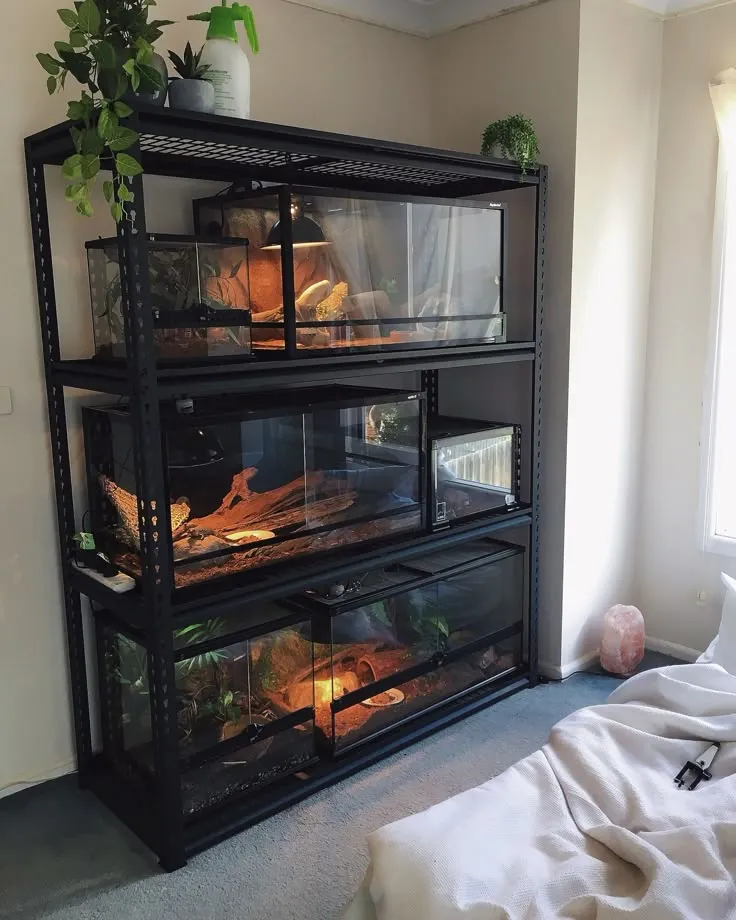
One of the most tangible impacts of reptile influencer culture has been on enclosure standards. A decade ago, the standard advice for a ball python was a 40-gallon breeder tank. Today, largely driven by content creators championing naturalistic setups and animal welfare research, the minimum recommended enclosure size has grown significantly in the community's collective consciousness—often to 4x2x2 feet or larger.
This shift didn't come from academic journals or pet store guidance. It came from creators posting side-by-side comparisons, interviewing behaviorists on camera, and showing audiences the observable difference in animal behavior between cramped and spacious enclosures. Viewers responded, and the market followed. Enclosure manufacturers like PVC cage builders and glass terrarium companies have adapted their product lines accordingly.
Breeding ethics have also come under scrutiny in ways that weren't happening publicly before social media. Spider ball pythons—a morph associated with a genetic neurological condition called "wobble"—became the subject of sustained community debate that played out largely on YouTube comment sections, Reddit threads, and Instagram posts. Creators took sides, audiences engaged, and the conversation reached a scale that would have been impossible in the pre-influencer era.
Dr. Priya Mehta, a veterinary researcher at a university in the Southeast who studies reptile welfare, notes that the shift is measurable. "We're seeing clients come in with much better baseline knowledge than they had five or ten years ago," she says. "Some of that is better internet resources generally, but a significant portion is clearly coming from content they've consumed on social platforms."
The Misinformation Problem
Here's where things get complicated. The same algorithmic mechanics that reward engaging content don't inherently reward accurate content. A video of someone handling a venomous snake recklessly gets more clicks than a thoughtful discussion of envenomation risk. A dramatic enclosure transformation—even one that's technically incorrect—outperforms a nuanced care guide.
Misinformation spreads through reptile social media in recognizable patterns. A creator with a large following posts incorrect care information—sometimes based on outdated sources, sometimes based on personal experience that doesn't generalize well, sometimes simply made up. Their audience, which may number in the hundreds of thousands, absorbs it as fact. Smaller creators and new keepers repeat it. By the time a correction circulates, the original claim has already reached a much larger audience.
Common misinformation categories in reptile content include:
- Incorrect temperature and humidity ranges presented with false confidence
- Dismissal of UVB lighting requirements for species that clearly benefit from it
- Feeding schedules and prey sizes that don't align with veterinary guidance
- Sensationalized content about venomous or large constrictors that distorts public perception
The impact isn't purely abstract. Reptile veterinarians report seeing animals with preventable conditions—metabolic bone disease, respiratory infections, obesity—whose owners cite care advice they found on social media. "I've had people argue with me in the exam room because a creator they follow told them something different," says one exotic vet in the Pacific Northwest who asked not to be named. "That's a new dynamic that didn't really exist before."
Trusted Voices Fighting Back
The encouraging news is that the reptile content space has developed a counter-culture of rigorously evidence-based creators who are actively working to correct the record. Channels and accounts run by herpetologists, exotic veterinarians, and long-term professional breeders have built substantial followings by prioritizing accuracy over entertainment value—and proving that the two don't have to be mutually exclusive.
Several creators have developed direct relationships with academic researchers and veterinary professionals, consulting them before publishing care content. Some have created explicit "myth-busting" series that tackle common misinformation head-on, citing peer-reviewed studies and presenting the evidence transparently.
The community also polices itself through comment sections and dedicated critique forums, though this process can be uneven and occasionally devolves into personal attacks rather than productive correction.
Conservation Messaging at Scale
Perhaps the most underappreciated dimension of reptile influencer culture is its potential for conservation impact. Reptiles are historically underfunded in conservation efforts compared to mammals and birds, partly because they generate less public sympathy. A content creator who builds genuine emotional connection between their audience and a species—showing its personality, its behaviors, its ecological role—can shift that dynamic in ways that a scientific paper cannot.
Several prominent reptile creators have used their platforms to raise money for field conservation projects, amplify research on threatened species, and advocate against harmful legislation. When a state proposes a ban on reptile ownership, reptile influencers can mobilize thousands of engaged constituents to contact their representatives in hours. That's a form of civic power that the herpetology community simply didn't have before.
The tension between entertainment and education, between reach and accuracy, isn't going away. But the reptile influencer economy is maturing, and the best voices in the space are increasingly sophisticated about their responsibility to the animals—and the audience—they serve.
For enthusiasts navigating this landscape, the advice from experts is consistent: cross-reference what you see on social media with established care resources, consult a reptile-savvy veterinarian for health questions, and look for creators who cite their sources and acknowledge uncertainty. The Reptile Top Sites community forums are a solid place to reality-check information before acting on it—because when it comes to animal care, popularity and accuracy are not the same thing.