Before the Exam Room: A Keeper's Guide to Exotic Pet Insurance (and the Fine Print That Gets Claims Denied)
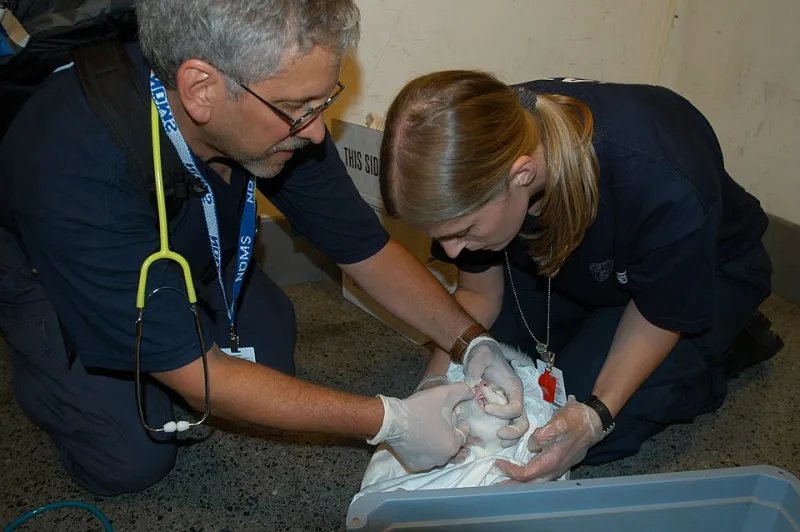
Photo: Win Henderson, Public domain, via Wikimedia Commons
Here's a scenario every reptile keeper dreads: your ball python stops eating, starts wheezing, and suddenly you're at an exotic vet's office staring at an estimate for radiographs, injectable antibiotics, and follow-up visits that adds up to $1,200. Or worse—your sulcata tortoise swallows something it shouldn't and the surgery quote comes back north of $3,000.
Dog and cat owners have had pet insurance to soften blows like this for decades. Reptile keepers? Until recently, the answer was basically "start a savings account and hope." That's changing. Exotic coverage has exploded in the US over the last few years, and several major providers now write policies for reptiles. But the fine print matters—a lot. Here's what you need to know before you sign anything.
Who Actually Covers Reptiles?
The exotic insurance market in the US is dominated by a handful of names: Nationwide has offered exotic pet coverage the longest and includes most reptiles under its exotic plan, while newer players like MetLife, Fetch, and Lemonade have expanded into exotics in various capacities. Coverage structures vary widely, so the first thing to understand is which model you're buying.
- Accident and illness plans are the standard. These reimburse a percentage (usually 70–90%) of eligible vet bills after your deductible, similar to dog and cat policies.
- Wellness riders add routine care coverage—annual exams, fecal tests—but often at a price that barely beats paying out of pocket.
- Accident-only plans are cheaper but skip illness coverage entirely, which is where most reptile vet bills actually come from.
The Loopholes That Leave Keepers Paying Cash
Talk to enough keepers and the same complaint comes up again and again: the claim denial. These are the big ones.
Pre-existing conditions. This is the killer. If your leopard gecko had metabolic bone disease before the policy's waiting period ended, anything related to it—future MBD flare-ups, related jaw or bone issues—is excluded. Permanent. This is why vets and seasoned keepers recommend insuring young, healthy animals, not ones with a history.
"Routine and preventable" exclusions. Parasite treatment is a gray zone. Some insurers cover a protozoal infection like coccidia as an illness; others classify deworming and parasite prevention as routine care and deny it. Read that section twice before buying.
Species and husbandry clauses. Some policies require that you maintain proper husbandry, and if a vet notes inadequate temperatures or UVB in the chart, the insurer may argue the illness was preventable through negligence. Keep records of your thermostat, your bulb replacement schedule, and your vet checkups. Documentation wins claims disputes.
Annual caps that don't match reality. A $5,000 annual limit sounds generous until you're dealing with a tortoise and a specialist exotics hospital. Check both the annual cap and any per-condition or per-incident limits.
Running the Numbers for Popular Species
Does insurance actually pencil out? Let's look at three common scenarios.
Ball pythons. Premiums for a young ball python typically run $10–$25/month depending on reimbursement level and deductible. The most common expensive problems—respiratory infections, inclusion body disease workups, and chronic anorexia diagnostics—can easily cost $300–$800 in diagnostics alone. If you get one significant illness in the first few years, you're roughly breaking even or ahead. The catch: ball pythons are famously hardy and many go their whole lives without a major bill.
Leopard geckos. At the low end of the premium scale, but also the low end of vet costs. A standard exotic vet visit runs $75–$150, and even MBD treatment often stays under $500. Insurance is a harder sell here unless you'd rather have predictable monthly costs than risk a surprise.
Tortoises. This is where insurance shines. Tortoises live for decades, are prone to expensive problems (bladder stones requiring surgery, beak overgrowth, shell rot), and exotic specialists charge accordingly. A $2,000+ cystotomy for bladder stones in a tortoise is not rare. Given a lifespan measured in generations, a modest monthly premium over a 40-year life is a reasonable hedge.
Questions to Ask Before You Buy
- Are reptiles specifically listed as covered, or just "exotics" generally?
- What's the waiting period before illness coverage kicks in—14 days? 30?
- Does the plan cover specialist and emergency exotic vets, or only general practices?
- Are diagnostics (radiographs, bloodwork, fecals) covered at the same rate as treatment?
- What's the claims process like, and does the insurer reimburse directly or pay the vet?
The Bottom Line
Insurance isn't a magic shield—it's a financial tool. If you keep a single hardy species, a dedicated savings account of $500–$1,000 may serve you just as well. If you keep multiple animals, long-lived species, or a species with known expensive health risks, a policy can turn a $3,000 emergency into a $300 headache. Whatever you choose, do it while your animal is healthy, document your husbandry, and read the exclusions before the emergency—not during it.