Built, Not Bought: Real Reptile Keepers Share the DIY Enclosure Hacks That Changed Everything
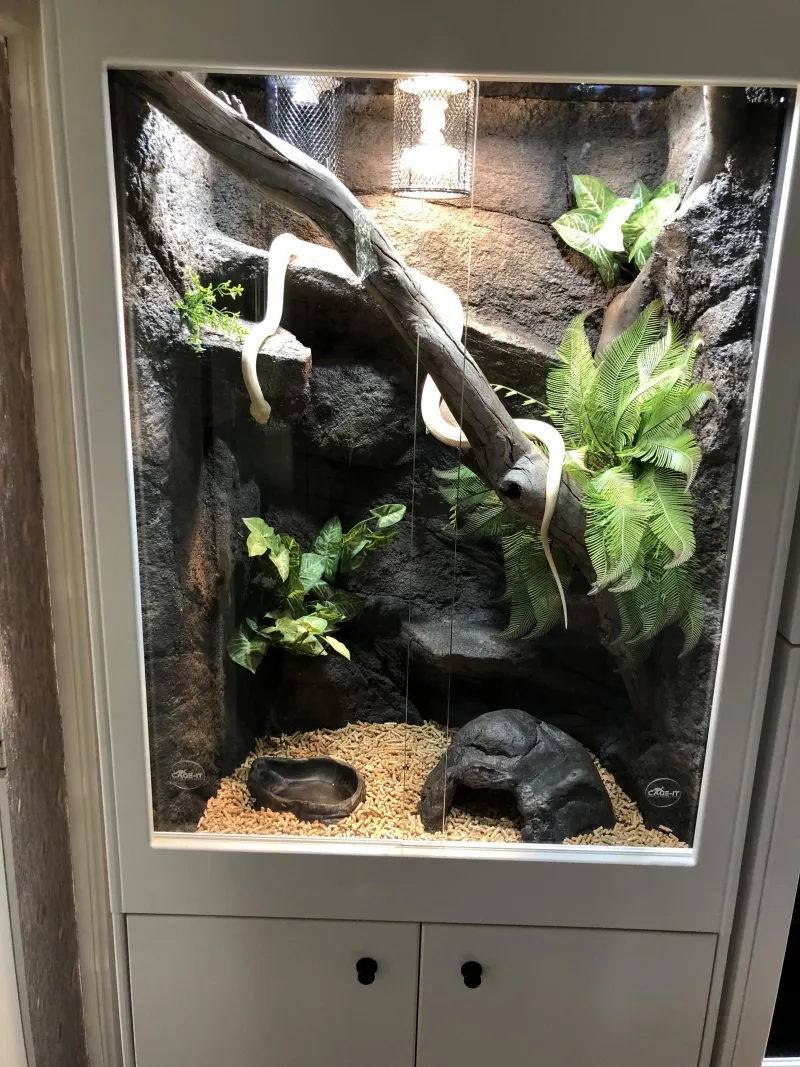
Photo: DIY reptile terrarium homemade enclosure setup, via i.pinimg.com
Walk into any big-box pet store and you'll find an entire aisle of reptile products promising to be the exact solution your animal needs. Then you'll check the price tag, take it home, and discover it doesn't quite fit your enclosure, runs too hot, or falls apart within six months. Sound familiar?
The reptile keeping community has been quietly solving this problem for years. On forums, Facebook groups, subreddits, and Discord servers, American hobbyists are sharing homegrown innovations that work better—and cost less—than most commercial alternatives. We reached out to keepers across the country to collect their best ideas. What came back was a masterclass in creative problem-solving.
The IKEA Hack That Launched a Thousand Enclosures
If you've spent any time in reptile communities online, you already know about IKEA KALLAX conversions. But the depth of creativity people bring to this hack continues to evolve.
Marcos, a keeper from Austin, Texas, uses a modified KALLAX unit as a stackable monitor lizard enclosure. He replaced the back panel with PVC-coated wire mesh for cross-ventilation, sealed the interior with pond liner, and installed a recessed lighting channel along the top using aluminum angle stock from Home Depot. Total build cost: around $180. A comparable commercial enclosure of similar dimensions runs $400 to $600.
"The key is the silicone," he says. "A lot of people rush the waterproofing step and then wonder why their substrate is always wet in the wrong places. Take your time on that part."
For keepers in smaller apartments, IKEA DETOLF display cases—originally designed for collectibles—have become a staple for smaller colubrids and geckos. The glass panels are easy to drill for ventilation, and the dimensions work surprisingly well for species that don't need a ton of vertical height.
Temperature Regulation on a Budget
Here's where things get genuinely clever. Maintaining a proper thermal gradient is one of the most technically demanding parts of reptile keeping, and commercial thermostats can run $50 to $150 or more. Several keepers have found workarounds that deliver comparable precision.
Jessica from Portland, Oregon, swears by a combination of a basic Inkbird ITC-308 temperature controller (available on Amazon for around $35) paired with a ceramic heat emitter. "I use it on everything now—my crested geckos, my blue-tongued skink, even my tortoise table. The dual-stage function means it can control both heating and cooling devices, which is huge if you're dealing with warm Pacific Northwest summers."
Another approach gaining traction in the community: using under-cabinet LED strips with dimmer controls as a low-heat ambient light source that also contributes to a gentle temperature gradient in bioactive setups. These strips produce minimal heat on their own but, when combined with a CHE or deep heat projector on a proper thermostat, allow keepers to fine-tune the enclosure's thermal landscape without relying on a single dominant heat source.
For keepers dealing with cold basements or drafty older homes—a genuinely common challenge in the Midwest and Northeast—a simple solution has emerged: wrapping the back and sides of glass enclosures with foam insulation board cut to size. It looks unremarkable but dramatically reduces heat loss, which means your heating elements work less hard and your electricity bill reflects it.
Enrichment Innovations That Actually Get Used
One of the more interesting shifts in the community over the past few years is a growing emphasis on behavioral enrichment—giving reptiles opportunities to explore, problem-solve, and express natural behaviors. Commercial enrichment products exist, but they're often overpriced for what they are.
Tamara, a keeper from Nashville with a collection that includes several large tegus, has developed a feeding enrichment rotation using repurposed kitchen tools. She hides prey items in silicone muffin tins, cardboard tubes from paper towel rolls, and crumpled newspaper balls. "Tegus are smart. If you just put food in the same spot every time, they stop engaging with the environment. Mixing it up keeps them sharp and way more fun to watch."
For arboreal species, PVC pipe fittings from any hardware store have become a community favorite. They're easy to clean, hold up to humidity, and can be configured into complex climbing structures by connecting different elbow and T-junction pieces. A full arboreal setup using PVC fittings costs about $20 to $30 in materials versus $80 or more for a comparable commercial product.
Live planted enclosures—bioactive setups—have also exploded in popularity, and keepers have developed some smart cost-cutting approaches here too. Pothos, spider plants, and bromeliads from local nurseries are far cheaper than "reptile-safe" plants sold through specialty retailers. The plants are identical; only the markup differs.
Moisture Management Without the Markup
Humidity control is another area where the community has gotten creative. Ultrasonic humidifiers designed for nurseries and small rooms—available at Walmart and Target for $25 to $40—work beautifully for tropical species enclosures when connected to a humidity controller. The Inkbird IHC-200 is a popular choice, available for around $30, and handles the automation side cleanly.
For substrate moisture in bioactive enclosures, several keepers have adopted a drainage layer technique using hydroton clay balls (sold for hydroponic gardening) topped with a mesh divider and then the actual substrate mix. This approach prevents the anaerobic "swamp" conditions that kill bioactive setups. A bag of hydroton costs about $15 and goes a long way.
The Bigger Picture
What's striking about these hacks isn't just the cost savings—it's the level of engagement they represent. Keepers who build their own enclosures understand their animals' needs more deeply because they've had to think through every design decision. They're not just consumers; they're problem-solvers.
That kind of active, thoughtful approach is exactly what separates good reptile keeping from simply owning reptiles. The community has figured out something important: premium outcomes don't require premium price tags. They require attention, creativity, and a willingness to experiment.
Got a DIY enclosure hack that belongs on this list? Drop it in the Reptile Top Sites community forum. The best ideas in this hobby have always traveled keeper to keeper.