Gone in a Flash: What Really Happens When Your Reptile Disappears—and How to Get Them Back

Photo: U.S. Institute of Peace, CC BY 2.0, via Wikimedia Commons
It usually starts with a weird, sinking feeling. You walk up to the tank, notice the lid is slightly ajar, and your stomach drops. Your ball python—the one you've had for six years—is gone. Not hiding under a log. Not wedged behind the water dish. Just gone.
This scenario plays out in American households thousands of times every year. And while most owners panic, the best outcomes belong to the ones who take a breath and get strategic fast.
Why Reptiles Bolt in the First Place
Understanding the escape isn't just an exercise in self-blame—it's actually your first clue about where to look. Reptiles don't run away the way dogs do. They're not emotional. They're opportunistic.
For snakes, the drive to explore is nearly hardwired. "Snakes are constantly testing their environment for weaknesses," says Dr. Lena Howell, a herpetologist based out of Gainesville, Florida, who has consulted on dozens of escape cases. "A gap that looks too small to you is often not too small for them. They're built to exploit exactly that kind of space."
Lizards, on the other hand, often escape during handling or when a door or window is left open briefly. Green iguanas and blue-tongued skinks are notorious for making a run for it the moment they sense an opportunity. Tortoises—yes, tortoises—are surprisingly capable escape artists, especially in outdoor enclosures with soft soil near the perimeter.
Common structural vulnerabilities include:
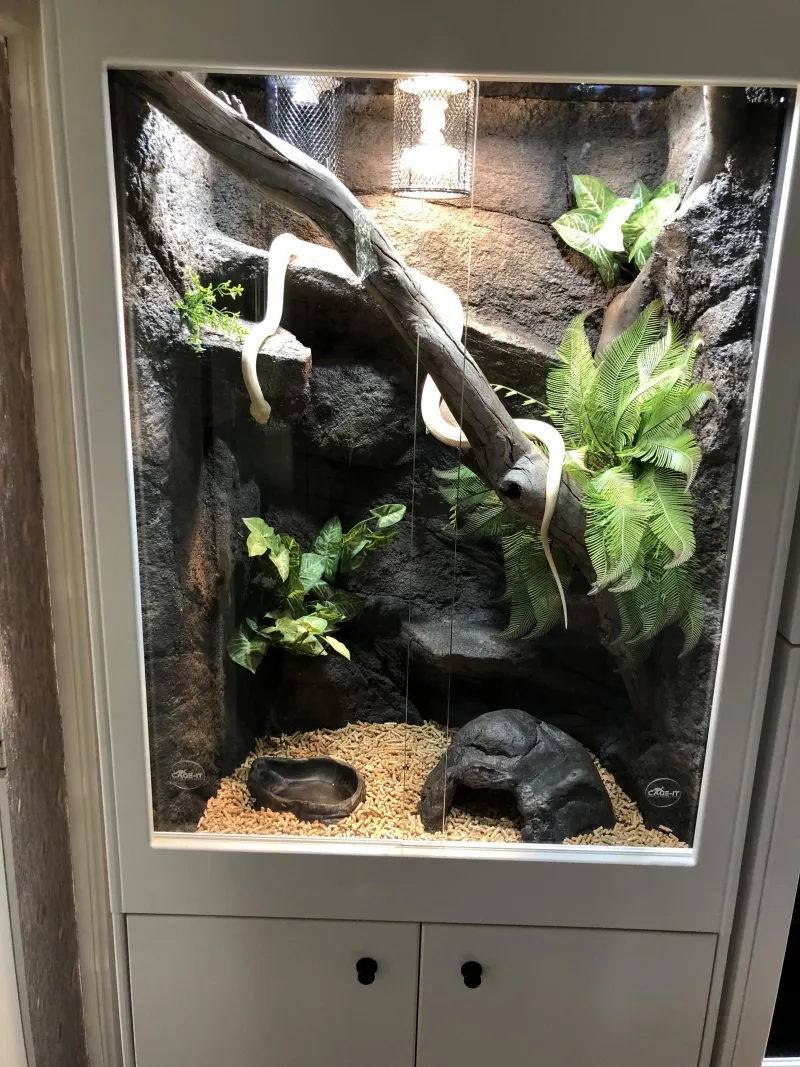
- Screen lids with unsecured clips
- Doors left open during feeding
- Cracks in wooden enclosures
- Gaps around pipes or vents in reptile rooms
The First 24 Hours Are Everything
Time is your biggest enemy after a reptile goes missing. Most escaped reptiles don't travel far initially—they tend to find the nearest dark, warm space and stay put. In the first 24 hours, they're probably still in your home.
Start your search low and slow. Get down on your hands and knees and check under every appliance, behind the refrigerator, inside closets, under bathroom sinks, and behind water heaters. Reptiles are thermotactic—they seek warmth—so heating appliances and electronics are prime hiding spots.
Leave a warm hide (a heating pad set to low under a box with a small opening) in the room where the escape happened. Many owners have found their animals curled up inside by morning.
For snakes specifically, placing a damp towel on the floor can help. They're attracted to moisture. Check it every few hours.
When the Search Goes Outdoors
If your reptile has been missing for more than a day or two, or if there's a clear exit point to the outside, the search gets more complicated—and geography starts to matter a lot.
In southern states like Texas, Georgia, and Florida, escaped reptiles can actually survive outdoors for extended periods, especially during warmer months. This is both good news (they may still be alive and healthy) and bad news (they can travel farther and blend into natural environments). In northern states during winter, the window of survival for tropical species closes fast. A ball python left outside in Minnesota in October has a very short runway.
Mark Delgado, an animal control specialist in San Antonio who handles exotic animal calls, says outdoor searches should focus on dense ground cover, woodpiles, under porches, and near water sources. "People always look too far," he says. "Nine times out of ten, if a reptile got outside, it's within 50 feet of the house. They're not trying to go anywhere specific. They're just following their instincts."
Social Media: The Unexpected Game Changer
Here's something that's changed dramatically in the last decade: social media has become one of the most effective reptile recovery tools available, and it costs nothing.
Facebook groups like local lost-and-found pet pages, neighborhood community groups, and dedicated reptile keeper communities have reunited hundreds of owners with escaped animals. Nextdoor is particularly effective for neighborhood-level alerts. When someone in suburban Ohio finds an unusual lizard in their garden, the first thing they often do is post a photo online—and if you've already put out a local alert, there's a real chance they'll see it.
Reddit's r/reptiles community has documented dozens of reunions facilitated by posts from confused people who found a strange reptile and had no idea what to do with it. TikTok and Instagram have also played a role, with viral posts about found reptiles occasionally reaching the original owner through shared networks.
Post clear photos, include your general location (not your exact address), describe any identifying markings, and offer a reward if you're able. The more shareable your post, the better.
Your Reptile Recovery Checklist
When the panic sets in, it helps to have a plan. Here's a practical checklist to work through:
Immediate Steps (0–6 hours)
- Confirm the escape route and secure the enclosure
- Search every low, warm, dark space in the room
- Set up a warm hide trap near the escape point
- Place a slightly damp towel on the floor (for snakes)
- Check behind and under all appliances
Short-Term Search (6–48 hours)
- Expand search to entire home
- Check inside shoes, bags, and stored items
- Post on local Facebook groups and Nextdoor
- Alert neighbors verbally or with flyers
- Contact local reptile rescues and shelters
Extended Search (48+ hours or outdoor escape)
- File a report with local animal control
- Post on regional reptile keeper forums
- Check outdoor areas methodically at dawn and dusk
- Contact local wildlife rehabilitators
- Consider a humane trap with a warm hide and food lure
Don't Give Up Too Soon
Some of the most remarkable recovery stories involve reptiles found weeks—even months—after going missing. A red-tailed boa was found alive inside a couch in Denver, Colorado, six weeks after its owner had given up hope. A leopard gecko in Portland, Oregon, turned up in a neighbor's garage nearly two months later, thin but alive.
Reptiles are resilient. Their metabolisms are slow, their needs are minimal compared to mammals, and they're remarkably good at finding what they need. Your job is to stay visible in the community, keep your alerts active, and remain open to the call or message that says, "I think I found your snake."
The reptile keeper community is also surprisingly tight-knit and generous. Reach out here on Reptile Top Sites' community forums—there are members who've been through this and have region-specific advice that could make all the difference.