Stop! Read This Before You Hand Over Cash at the Expo Table
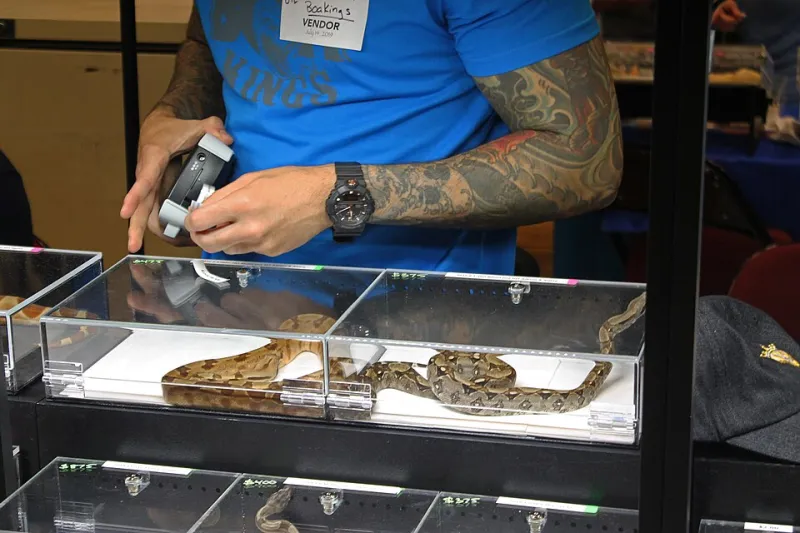
Photo: istolethetv, CC BY 2.0, via Wikimedia Commons
There's nothing quite like your first big reptile expo. Rows and rows of tables, breeders from a dozen states, animals you've only seen on Instagram sitting right there in a tub. It's exciting. It's also the single easiest place in the hobby to make an expensive mistake.
I've been walking expo floors for over a decade, and I've watched plenty of newcomers walk away with animals they regretted buying by Sunday night. The good news? Spotting a problem animal—or a problem seller—doesn't require a veterinary degree. It requires slowing down. Here are the seven red flags I check for before money ever changes hands.
1. Clicks, Bubbles, or an Open Mouth
Lean in and listen. A faint clicking or wheezing sound when the animal breathes, bubbles around the nostrils or mouth, or a snake holding its mouth slightly open are classic signs of a respiratory infection. Respiratory infections are contagious, stressful, and can wipe out an entire collection if brought home. One breeder I spoke with put it bluntly: "If I hear one animal clicking at my table, I pull every animal from that rack until I know what's going on. Buyers should have the same standard."
2. 'Just Shy' Versus Actually Lethargic
Sellers love the word "shy." Some species are genuinely docile and slow—no argument there. But there's a difference between an animal that tucks up when you approach and one that doesn't react when gently touched or, worse, feels limp when handled. A healthy reptile has muscle tone. If the seller has to talk you past the animal's behavior, ask why.
3. Stuck Shed and Sunken Eyes
Look at the toes, the tail tip, and around the eyes. Retained eyecaps, constricted toe bands from old shed, or a wrinkled, dehydrated appearance tell you about the husbandry the animal came from—humidity, hydration, and general care. Poor shed history doesn't always mean a sick animal, but it's a reliable indicator of a keeper who cuts corners.
4. No Feeding History, No Sale
Ask when the animal last ate and what it's eating. A reputable breeder knows the date, the prey size, and the frequency without checking notes. If you get a shrug, or "it ate last week, I think," walk away. For hatchlings, ask whether it's an established, consistent eater—this matters enormously with species known for picky appetites.
5. The Table That Won't Let You Look Closely
You should be able to see the animal in person, handle it if appropriate, and inspect the tub. A vendor who keeps animals behind the table, rushes you, or pulls one out already bagged "so you don't stress it" is hiding something—maybe mites, maybe scale damage, maybe an animal that looks nothing like the photo.
6. Prices Too Good to Be True
A $60 "blue-eyed leucistic" or a rare morph priced at a fraction of market value isn't a deal—it's a bait. Scammers at expos rely on buyers who don't know current market prices. Do your homework on the morphs and species you're shopping for before you walk in.
7. No Paperwork, No Contact Info
Every legitimate sale should come with the breeder's contact information, a receipt, and—for species that require it—relevant permits or documentation. Ask about the animal's origin: captive-bred from their collection, or imported? Captive-bred animals are healthier, better acclimated, and far better for wild populations.
The 24-Hour Rule That Saves Wallets
Here's the advice veteran keepers give more than any other: if you're not sure, sleep on it. Most expos run both weekend days. If the animal is still on your mind Sunday morning, go back and buy it. If the seller has pressure tactics—"I've got two other people looking at it"—that's red flag number eight, even if I didn't have room for it on the list.
And once you're home? Quarantine. Every new animal, minimum 60–90 days, in a separate room from your collection. Because the saddest expo story isn't the one about the animal you didn't buy. It's the one where a bargain brought something home to the rest of your reptiles.