Scales and Sacrifice: Meet the American Reptile Keepers Turning Their Passion Into a Lifeline for Endangered Species
For most of us, keeping reptiles is a deeply personal thing — the quiet satisfaction of a well-maintained vivarium, the thrill of a successful breeding season, the bond that forms with an animal most people would never dream of keeping. But for a growing number of enthusiasts across the United States, that passion has grown into something larger than themselves: genuine conservation work that's making a measurable difference for some of the most vulnerable reptile species on the planet.
These aren't professional biologists with university funding (though some collaborate with them). They're hobbyists, collectors, and breeders who decided that the skills and knowledge they'd built over years of keeping reptiles could be put to work for the animals that need help most. We tracked down five of them and asked them to tell us their stories — the wins, the heartbreaks, and the practical realities of doing conservation work from your home or backyard.
1. Marcus Webb — Gopher Tortoise Advocacy, Georgia
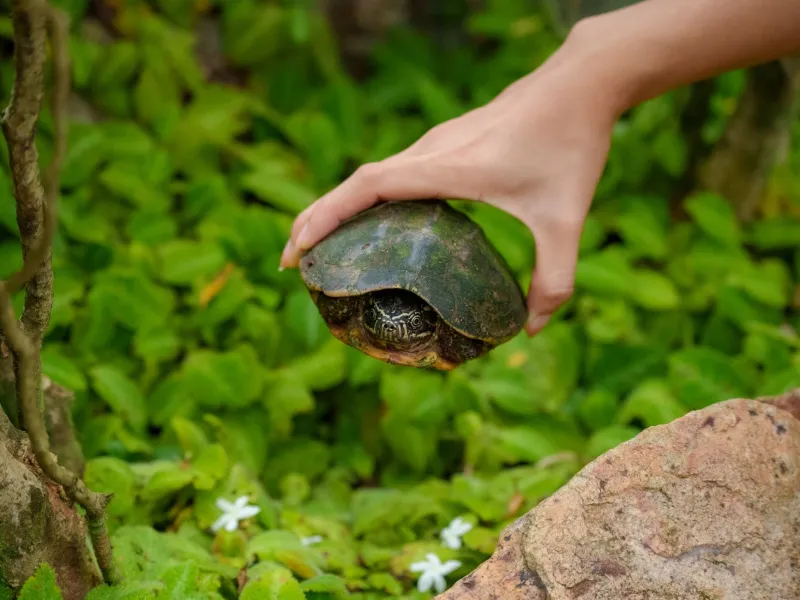
Marcus Webb didn't set out to become a tortoise conservationist. He started, like a lot of us, with a single animal — a red-footed tortoise he got in his twenties — and things kind of snowballed from there. Today, from his property outside of Savannah, Georgia, Marcus works as a permitted wildlife rehabilitator focused on the gopher tortoise (Gopherus polyphemus), a keystone species of the southeastern longleaf pine ecosystem that's listed as threatened across much of its range.
"Gopher tortoises are what's called an ecosystem engineer," Marcus explains. "Their burrows provide shelter for over 350 other species. When they disappear, a whole community of animals goes with them."
Marcus's work involves receiving injured and displaced gopher tortoises — often animals displaced by development — rehabilitating them, and coordinating with the Georgia Department of Natural Resources on relocation to protected lands. He's also built relationships with local landowners, educating them about the legal protections gopher tortoises carry and the value of maintaining natural habitat on their properties.
His advice for readers: "Get permitted. Work with your state wildlife agency, not around them. The paperwork is annoying but it opens doors and gives you legal protection. And find a vet who actually knows tortoises before you need one."
2. Denise Okafor — Eastern Indigo Snake Breeding, Florida
The eastern indigo snake (Drymarchon couperi) is the longest native snake species in North America and one of the most striking — a glossy, blue-black animal that can reach over eight feet in length. It's also federally threatened, largely due to habitat loss and the historical practice of using gasoline to flush rattlesnakes from gopher tortoise burrows (which indigos also use).
Denise Okafor, based in north-central Florida, is part of a small network of private breeders who work under federal and state permits to maintain a captive assurance population of eastern indigos. Her involvement grew out of years of keeping colubrids and a chance meeting at a Florida Herp Society event with a biologist working on indigo recovery.
"It's not glamorous," Denise says with a laugh. "These snakes are high-maintenance, they need a lot of space, and the permitting process is intense. But every animal we produce that gets placed into another responsible breeding program or potentially released into a reintroduction site — that matters."
Her breeding facility operates in coordination with the Orianne Society, a nonprofit focused on indigo snake conservation, and she participates in annual surveys to contribute population data.
Her advice for readers: "Volunteer first. Reach out to conservation organizations in your state and offer your time and skills. That's how I got connected. You don't have to start your own program — supporting existing ones is incredibly valuable."
3. Ray and Connie Thurston — Bog Turtle Habitat Restoration, New Jersey
The bog turtle (Glyptemys muhlenbergii) holds the distinction of being the smallest turtle species in North America and one of the most critically endangered. Ray and Connie Thurston, a retired couple from rural New Jersey, became involved in bog turtle conservation almost accidentally when they discovered a small population on the wetland portion of their 40-acre property.
"We called the state fish and wildlife office because we didn't know what we had," Ray recalls. "A biologist came out, and things kind of took off from there."
Rather than a captive breeding program, the Thurstons' contribution is habitat management — working with the New Jersey Division of Fish and Wildlife to maintain and improve the sphagnum bog habitat that bog turtles depend on. This includes controlled vegetation management to prevent the encroachment of invasive species like common reed (Phragmites australis) and periodic water level monitoring.
They've also opened their property to annual population surveys and have hosted graduate students conducting research, turning their land into an informal field station.
Their advice for readers: "You don't have to keep animals to do conservation. If you have land — even a small piece with the right habitat — reach out to your state wildlife agency. You might be sitting on something more valuable than you realize."
4. Priya Nair — Alligator Snapping Turtle Recovery, Louisiana
The alligator snapping turtle (Macrochelys temminckii) looks like something out of the Cretaceous, and in some ways it is — these animals have changed remarkably little over millions of years. They've also been hammered by commercial harvest and habitat degradation, and several states have moved to list them as species of concern.
Priya Nair, an IT professional by day and obsessive chelonian keeper by night, operates a small permitted breeding facility in Louisiana focused on alligator snappers. Her animals contribute to a regional assurance colony network, and she's been involved in headstarting programs — raising hatchlings past their most vulnerable early life stage before they're released into protected waterways.
"Headstarting is really where private keepers can make a direct contribution," Priya explains. "Wildlife agencies often don't have the capacity to raise large numbers of hatchlings. We do. It's literally what we do for fun."
She's also become an outspoken advocate for alligator snapper conservation in Louisiana's regulatory process, submitting public comments and testifying at wildlife commission meetings.
Her advice for readers: "Learn to speak the language of conservation — population viability, genetic diversity, assurance colonies. When you engage with wildlife agencies and scientists as an informed partner rather than just a hobbyist, the relationship changes. They take you seriously."
5. Thomas Birch — Blunt-Nosed Leopard Lizard Awareness, California
Thomas Birch's focus is on a species most reptile keepers have never heard of: the blunt-nosed leopard lizard (Gambelia sila), a federally endangered lizard endemic to California's San Joaquin Valley. Unlike the other folks on this list, Thomas doesn't work directly with the animals — the blunt-nosed leopard lizard is so sensitive that captive handling is heavily restricted. Instead, his contribution is awareness and advocacy.
Through a popular social media presence and regular participation in California Herps forums, Thomas has made it his mission to educate the broader reptile community about this species and the agricultural and development pressures threatening its remaining habitat. He organizes volunteer workdays with conservation land trusts protecting San Joaquin Valley grasslands and has helped raise funds for habitat acquisition.
"Not every conservation contribution involves animals in enclosures," Thomas says. "Sometimes it's about building political will and community awareness. The blunt-nosed leopard lizard doesn't have a lot of advocates. I decided to be one."
His advice for readers: "Pick a species that speaks to you and become the person who knows everything about it. Follow the research, connect with the scientists, show up for public comment periods. Expertise and persistence matter."
How You Can Get Involved
The stories above represent a spectrum of approaches — from permitted captive breeding to habitat management to pure advocacy — and that's intentional. There's no single right way to contribute to reptile conservation. What matters is that you bring genuine commitment, respect for regulatory frameworks, and a willingness to learn.
A few starting points if you're ready to take the next step:
- Connect with your state wildlife agency to learn about permitted wildlife activities in your area
- Reach out to regional herpetological societies — most states have active groups that partner with conservation efforts
- Look into organizations like the IUCN Tortoise and Freshwater Turtle Specialist Group, the Orianne Society, or Amphibian and Reptile Conservancy for volunteer and partnership opportunities
- Document and report reptile sightings through platforms like iNaturalist, which contribute real data to scientific research
The reptile community in the United States has an enormous amount of collective knowledge, passion, and practical skill. When that gets pointed toward conservation, remarkable things happen. These five people are proof.